
Best Skincare for Damaged Barrier Skin
Category Skincare
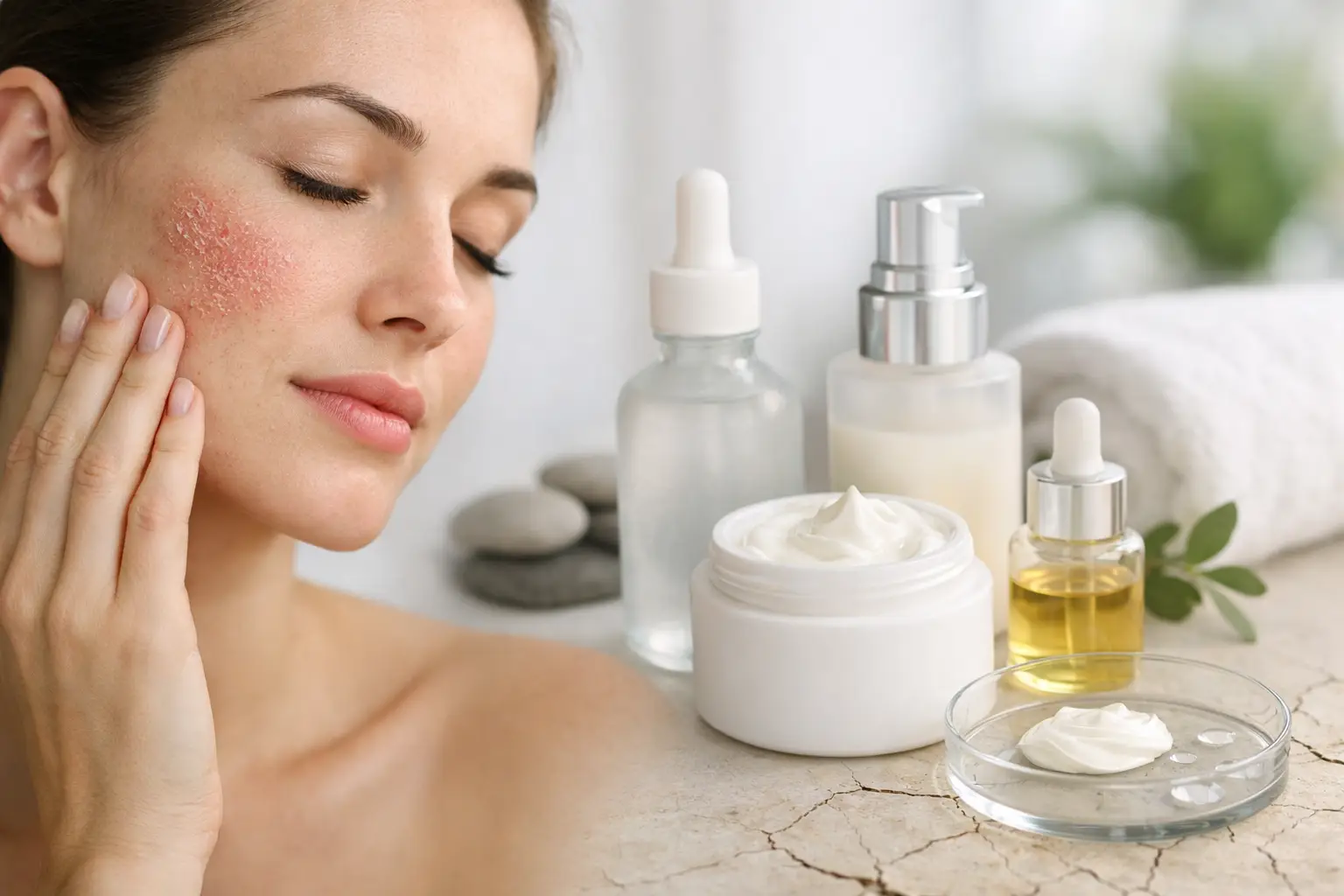
Your skin suddenly feels tight after cleansing, stings when you apply products you used to love, and looks both dry and shiny at the same time. That is often the point when people start searching for the best skincare for damaged barrier skin – not more actives, not harsher treatments, just relief that actually works.
A compromised skin barrier can make even a carefully chosen routine feel wrong overnight. The good news is that barrier repair does not need to be complicated. In most cases, it needs to be gentler, more consistent and far less crowded. When your skin is asking for calm, the best approach is to give it exactly that.
What a damaged skin barrier actually looks like?
Your skin barrier is the outermost layer that helps keep moisture in and irritants out. When it is healthy, skin tends to feel balanced, smooth and resilient. When it is weakened, you may notice dryness, flaking, redness, sensitivity, rough texture or sudden reactivity to products that never used to bother you.
For some people, the signs are obvious. Skin feels sore, looks inflamed and can sting on contact with water or moisturiser. For others, the clues are subtler. You may simply feel as though your glow has disappeared, your complexion is dehydrated no matter what you apply, or your foundation starts clinging to patches it did not before.
This is where barrier-focused skincare earns its place. You are not trying to chase perfection. You are trying to restore comfort, hydration and trust in your skin again.
Best skincare for damaged barrier skin starts with less
When skin is compromised, there is a temptation to throw everything at it. Rich masks, exfoliating acids, spot treatments, retinoids, multiple serums – all in the hope that one of them will fix the problem quickly. In reality, overloading fragile skin usually prolongs the irritation.
The best skincare for damaged barrier skin is usually built around three essentials: a gentle cleanser, a hydrating serum and a barrier-supporting moisturiser. That is enough for most people while the skin settles.
A cleansing oil can be especially helpful if your face feels stripped by foaming cleansers. A well-formulated oil cleanser lifts sunscreen, make-up and daily build-up without leaving the skin feeling tight. The texture matters too. If cleansing feels soft and comforting rather than squeaky and severe, your routine becomes easier to stick to.
A hydrating serum is the next useful step, particularly if dehydration is part of the problem. Ingredients like hyaluronic acid help draw water into the skin, while peptides can support a smoother, healthier-looking surface. The key is to apply hydration to slightly damp skin and follow it with a cream that helps keep that moisture in place.
Then comes the product that often makes the biggest difference – moisturiser. For barrier repair, ceramides are one of the most valuable ingredients to look for. They are naturally present in the skin and help reinforce its protective structure. A ceramide moisturiser can make skin feel more comfortable quite quickly, though visible repair still takes time and consistency.
How to build a barrier-repair routine that feels luxurious, not clinical
Barrier care does not need to feel dull. In fact, when skin is stressed, a refined, sensorial routine can be part of the healing. The goal is not just to treat dryness and irritation, but to create a ritual your skin can rely on.
Morning
Start with a very gentle cleanse, or simply rinse with lukewarm water if your skin is especially dry and you did a thorough cleanse the night before. Follow with a hydrating serum to replenish water, then apply a ceramide-rich moisturiser to support the skin through the day.
If you tolerate SPF well, wear it. Sun exposure can make barrier damage harder to recover from. If your usual sunscreen stings, it may be worth pausing and trying a gentler formula once the skin is calmer.
Evening
In the evening, remove sunscreen and make-up with a nourishing cleansing oil that does not leave the skin feeling stripped. Then apply your hydrating serum and seal everything in with a richer moisturiser.
If your skin feels exceptionally dry, you can use a slightly more generous layer of moisturiser at night. Think comfort, not excess. The skin does not need ten products. It needs the right ones, used consistently.
For those who want a simple, elegant routine, this is where a curated edit shines. Amivie’s calendula cleansing oil, hyaluronic acid and peptide serum, and ceramide moisturiser align naturally with the kind of barrier-supportive regimen that stressed skin tends to welcome.
What to stop doing while your barrier heals
One of the hardest parts of repairing the barrier is stepping back from products that once felt effective. If your skin is reactive, pause exfoliating acids for a while. Skip scrubs altogether. Be cautious with retinoids until your skin feels stable again.
It is also worth looking at frequency. Even a gentle cleanser used too often can tip dry skin into discomfort. The same goes for very hot water, aggressive cleansing tools and constant product switching.
There is a trade-off here. If you stop all actives for a period, concerns like breakouts, pigmentation or texture may not move as quickly as you would like. But if the barrier is impaired, continuing to push usually creates a longer detour. Repair first, then rebuild.
How long does barrier repair take?
This depends on what caused the damage and how severe it is. Mild irritation from over-exfoliation may improve within a couple of weeks with a simplified routine. A more compromised barrier can take longer, especially if skin has been inflamed for months or is dealing with cold weather, prescription treatments or underlying sensitivity.
The first improvements are usually about feel rather than appearance. Skin stings less. Tightness eases. Products stop burning. After that, you may see less redness, fewer flaky patches and a smoother surface that reflects light more evenly.
If your skin is worsening despite a gentle routine, or if irritation is severe and persistent, it is worth speaking to a GP or dermatologist. Sometimes what looks like a damaged barrier is also linked to eczema, rosacea or dermatitis, and that changes the best course of action.
The best skincare for damaged barrier skin is not the strongest
There is a certain confidence in doing less, especially when the beauty world often rewards intensity. Stronger is not always better. More active is not always more effective. When your barrier is compromised, the smartest skincare is the kind that supports rather than challenges.
Choose formulas that are hydrating, soothing and built around barrier-respecting ingredients. Look for ceramides, humectants and calming botanicals. Give your skin a few quiet weeks. Let your routine become a place of consistency, not confusion.
That is often when your glow begins to return – not because you forced it, but because you finally gave your skin the care it was asking for.